The Integration of Web3 Gaming: AAA Studios Finally Embrace True Asset Ownership
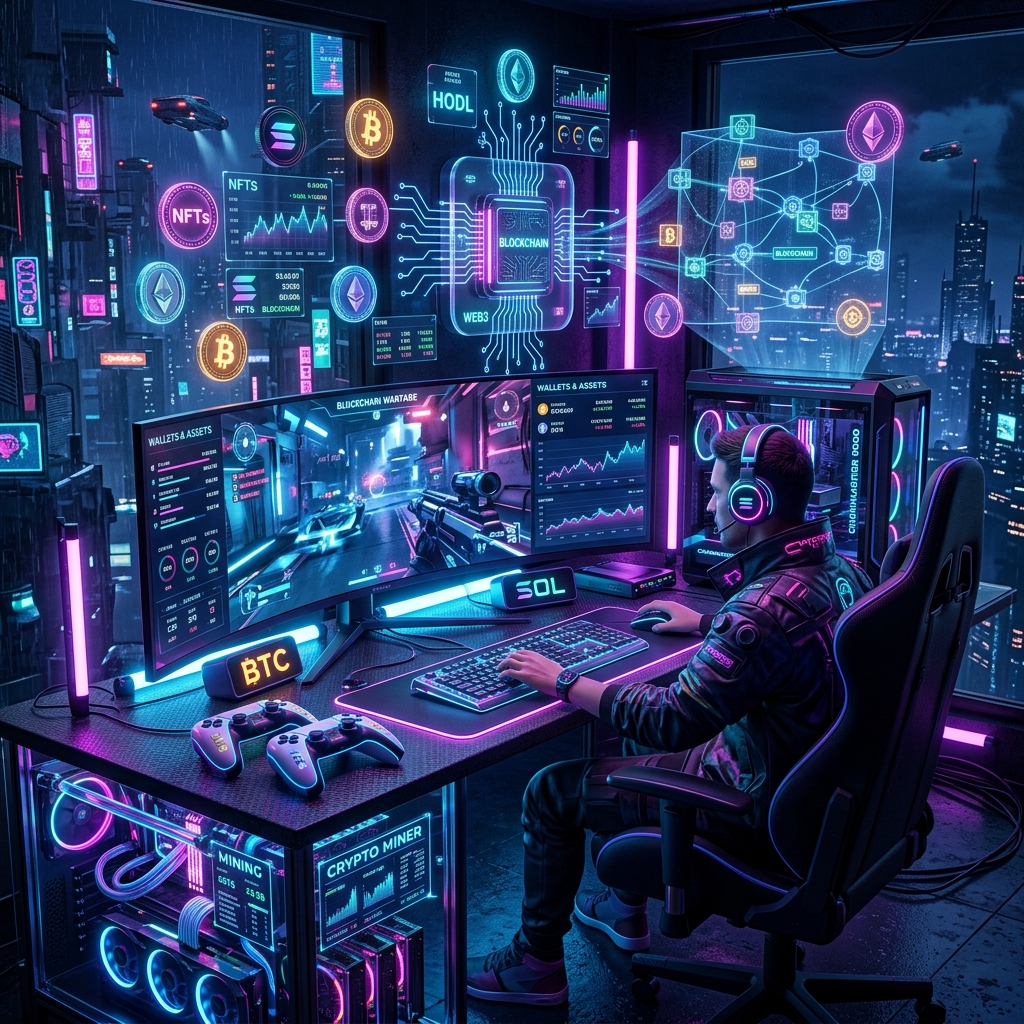
For the first half of the decade, "Web3The decentralized third generation of the World Wide Web, powered by blockchain networks and token economies. Gaming" was a polarizing term. Traditional gamers despised the financialization of their favorite pastime, while early crypto games suffered from unsustainable tokenomics and poor gameplay. In 2026, that narrative has completely flipped.
The major AAA studios have finally cracked the code. By abstracting away the complex crypto infrastructure and focusing purely on the benefits of true digital asset ownership, blockchain gaming is experiencing a massive, quiet revolution.
Here is how the landscape of Web3The decentralized third generation of the World Wide Web, powered by blockchain networks and token economies. gaming has matured and why it's driving the next massive wave of retail crypto adoption.
Invisible Web3The decentralized third generation of the World Wide Web, powered by blockchain networks and token economies.: The Death of the Seed Phrase
The biggest barrier to entry for early Web3The decentralized third generation of the World Wide Web, powered by blockchain networks and token economies. games was the onboarding process. Gamers didn't want to write down 12-word seed phrases, buy ETH for gas fees, or sign complex smart contract transactions just to equip a virtual sword.
Today, thanks to Account Abstraction (ERC-4337) and massive investments in user experience, the blockchain layer is entirely invisible.
- Players log in with their email or console accounts.
- Underlying wallets are automatically generated and secured via Passkeys.
- Gas fees are subsidized by the game studios (Paymasters).
Players simply play the game. The realization that their legendary loot is actually an NFT stored on a Layer 2 network like Base or Arbitrum usually comes after they decide they want to trade it on an open marketplace.
The End of Walled Gardens
Historically, money spent in games like Fortnite or Roblox was a sunk cost. You couldn't sell your skins, and if your account was banned, you lost everything.
AAA studios in 2026 have realized that offering interoperability and secondary markets actually increases player retention and lifetime value. By taking a small royalty fee on every peer-to-peer trade, studios are generating massive secondary revenue streams. Gamers are far more willing to spend $50 on an in-game item if they know they can resell it later for $40 on an open decentralized exchange (DEXDecentralized Exchange - A peer-to-peer marketplace where users trade cryptocurrencies directly without custody.).
The Rise of the Gaming L3s (Layer 3 Networks)
To handle the sheer volume of micro-transactions generated by a massive multiplayer game, general-purpose blockchains aren't enough.
In 2026, we are seeing the explosion of App-Specific Layer 3s (L3s). Built on top of Ethereum L2s, these custom networks offer:
- Zero Gas Fees: The studio pays the minimal rollup costs, keeping it free for users.
- Instant Finality: Actions happen in milliseconds, ensuring no lag in fast-paced competitive games.
- Custom Rulesets: Studios can enforce specific compliance or anti-cheat mechanisms directly at the sequencer level.
Networks like Ronin and Immutable zkEVM paved the way, but now major publishers are deploying their own sovereign chains using frameworks like the OP Stack and Arbitrum Orbit.
The Cross-Pollination of DeFiDecentralized Finance - Financial protocols built on public blockchains that eliminate intermediaries like banks. and GameFi
As in-game economies grow, they are naturally merging with Decentralized Finance (DeFiDecentralized Finance - Financial protocols built on public blockchains that eliminate intermediaries like banks.). We are now seeing protocols that allow players to use their high-value gaming assets as collateral for loans, or yield-farming mechanisms where holding certain guild tokens grants a share of the guild's raid profits.
Conclusion
The 2026 gaming market is proving that blockchain technology was never the enemy of good games; it was just poorly implemented. By putting gameplay first and utilizing crypto strictly for ownership and liquidity, the industry has birthed a multi-billion dollar secondary market.
Web3The decentralized third generation of the World Wide Web, powered by blockchain networks and token economies. gaming is no longer a niche genre; it is simply the new standard for how digital economies operate.
Are you actively playing any Web3The decentralized third generation of the World Wide Web, powered by blockchain networks and token economies. games? Share your top picks and strategies with other players in our community forum!
Editorial Disclaimer: The information provided in this article is solely for educational and informational purposes. It does not constitute financial or investment advice. Our writers conduct independent research, but the crypto market is highly volatile. Please do your own research and consult a certified financial advisor before making any investment decisions. Read our full Editorial Policy.
Alex Mercer
Senior Crypto Analyst & Researcher
Providing deep-dive on-chain analytics, market trends, and unbiased reporting on the Web3 ecosystem.
Join the Conversation 🚀
What are your thoughts on this? Connect with other crypto enthusiasts, share your analysis, and discuss the latest trends in our community forum!
Join our forum discussionDiscussion (0)
No comments yet. Be the first to share your thoughts!